Problem
AI platforms like ChatGPT, Gemini, and Perplexity are becoming the new front door for customer discovery. Customers increasingly seek financial guidance through these tools – not bank websites or apps. If Chase doesn’t adapt, we risk losing visibility, trust, and relevance in an AI-first world.
How might we integrate Chase app meaningfully within AI interfaces without breaking conversational flow?
Search is becoming action-oriented
Users aren't just looking for information, they also want to do something with it. AI changes search from navigation to execution.
Conversational
Intelligent
Simple
Each interaction should focus on a single action or outcome; feel fast and light without overwhelming the conversation.
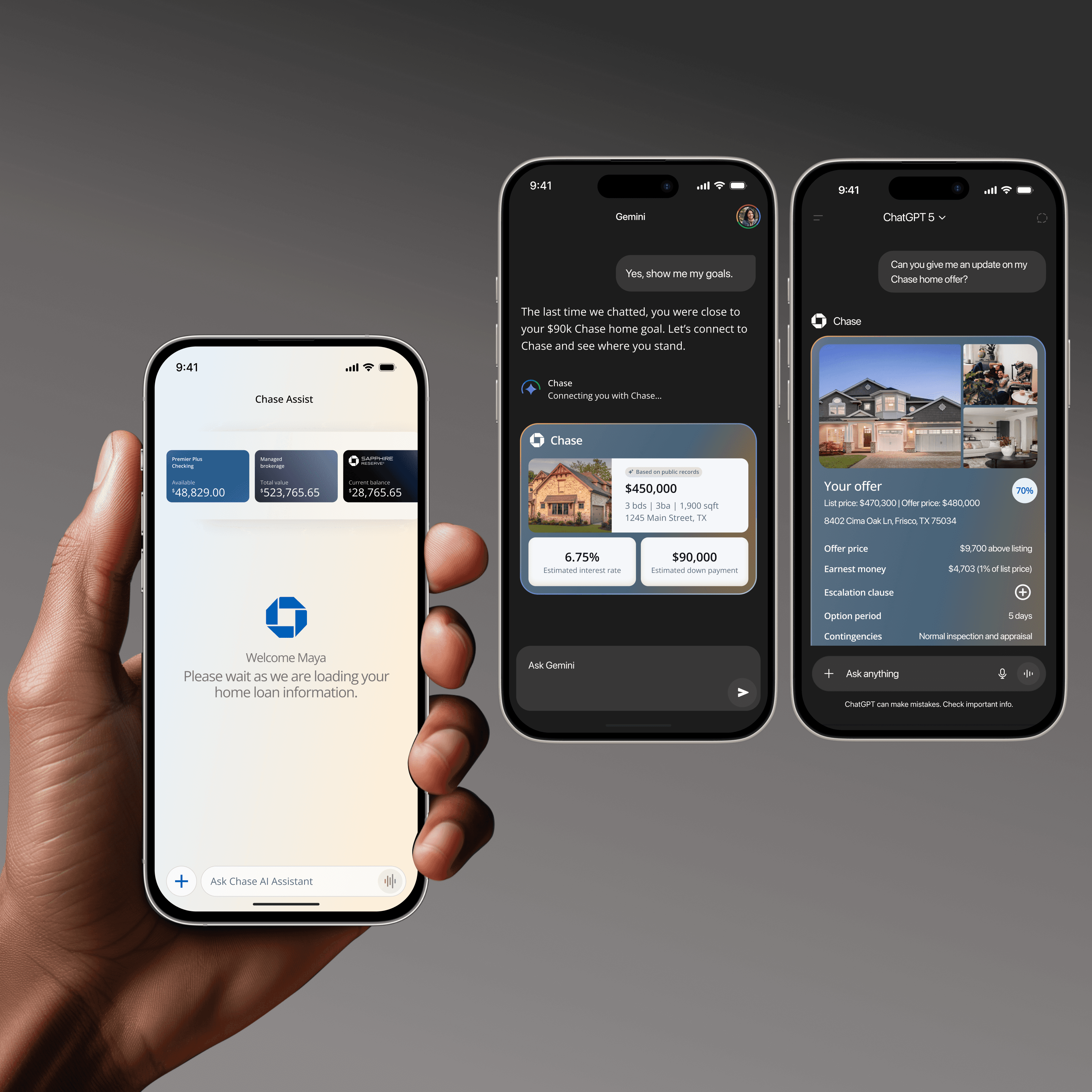
Use Case 1: ChatGPT
Why this works: the entire flow relies on user-owned documents, public data, and existing relationships, making it both realistic and low-risk to complete inside an AI interface.
Fixing a real, time-sensitive gap
When buyers need a lower pre-approval letter while actively house shopping (often on weekends), ChatGPT updates the letter instantly which is a task HLAs can’t handle in real time and current Chase app doesn't support digitally
Making the offer smarter
Executing without friction
Use Case 2: Gemini x Chase
Why the handoff matters: Gemini supports exploration; Chase owns execution. Together, they show how AI search can safely evolve into real financial action
Starting with curiosity, not forms
The journey begins with a photo of a home. Gemini estimates value using public data and grounds the question in prior context, like the customer’s home savings goal.
A deliberate shift to a trusted system
Chase proactively turns interest into action
Reflection
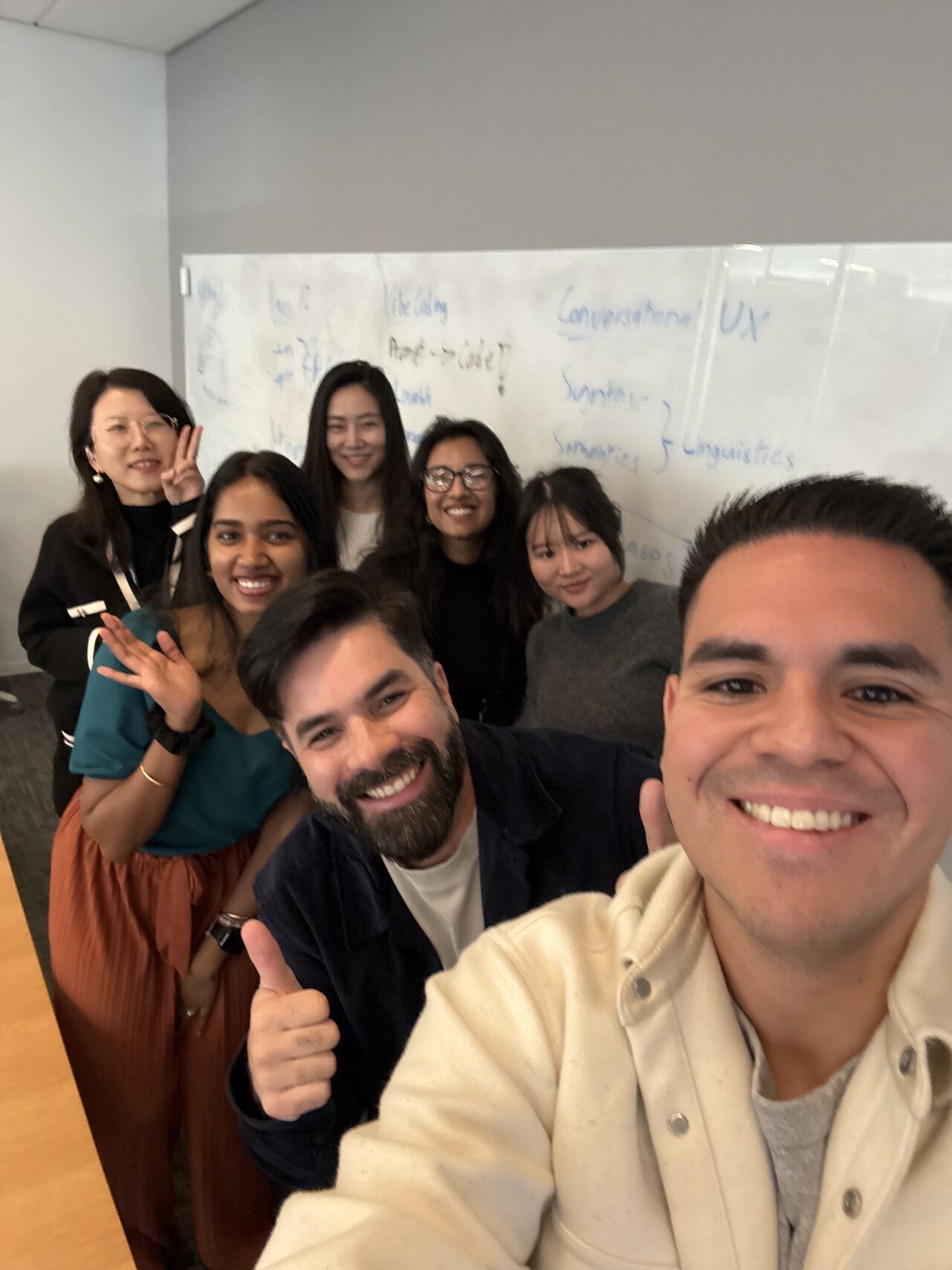
Creating these prototypes in less than than a week was a much needed design sprint to help us come up with concrete UX principles as we navigate AI integration conversations at Chase. I was proud to see this being presented to Jamie Dimon and team. Here are a few of my thoughts and learnings:
AI is very valuable when it removes timing gaps. The biggest unlock wasn’t smarter answers, but eliminating real-world delays (like weekend availability or manual processes).
The future of search is accountable action. AI search only earns trust when it leads to clear next steps, ownership, and outcomes, not just recommendations.
Trust is a design boundary. Deciding when to stay inside an AI interface versus handing off to a secure system was a core UX decision.
Intent matters more than interface. Designing around what users are trying to accomplish. This creates more natural, scalable interaction patterns.